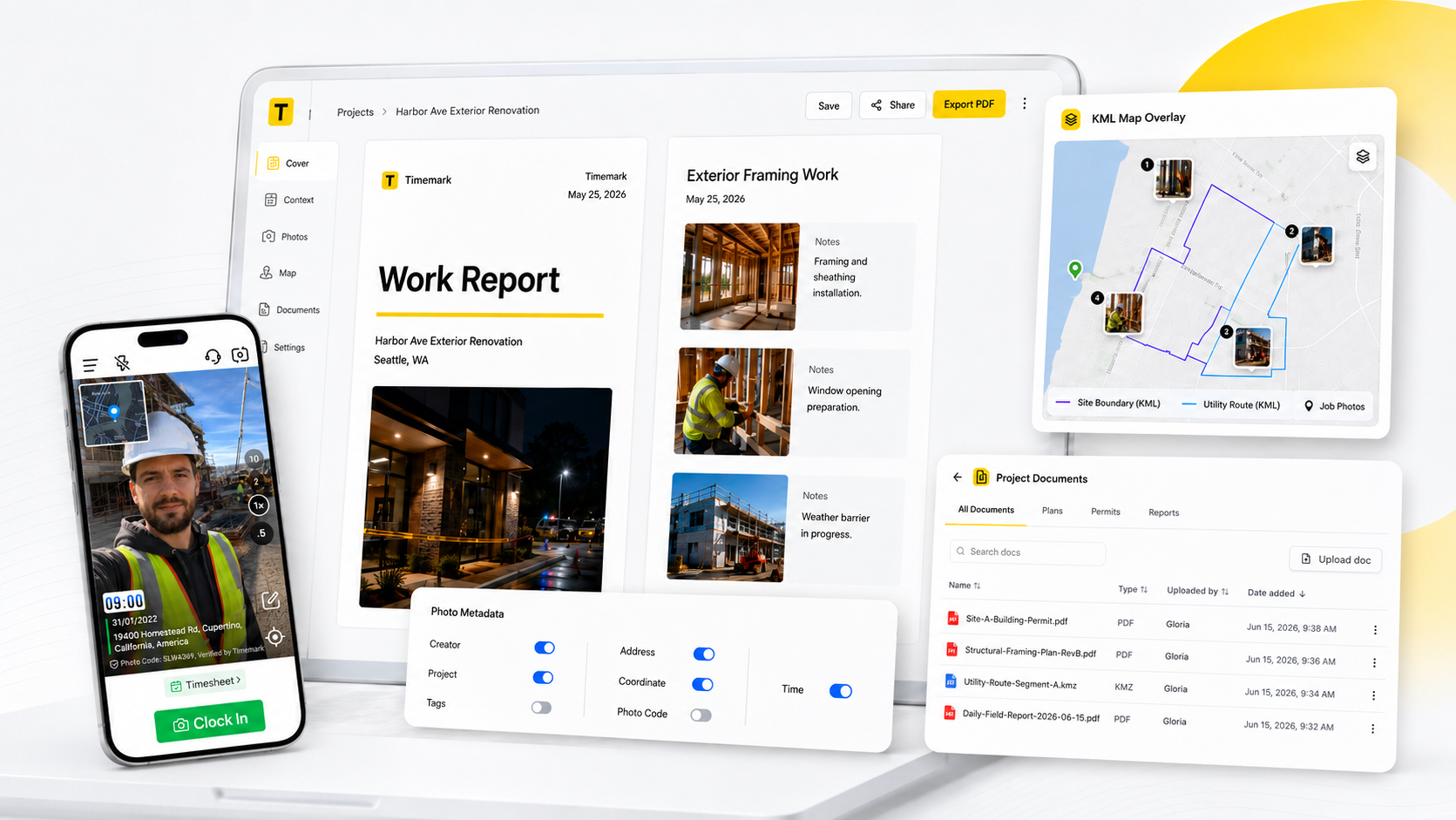


If you take photos for work, whether it’s for a report, documentation, or just showing your team what’s going on, you’ve probably run into this: a great photo with little context. No date. No time. No way to tell when it was taken unless you dig through metadata. But metadata won’t help if the photo gets screenshotted, compressed, or sent through WhatsApp. I’ve dealt with this too many times when I was working as an office coordinator.
What you need is a visible timestamp right on the photo. In this guide, I’ll walk you through what actually works for Android devices. Whether you want something simple and quick or or need bulletproof documentation for an inspection, I’ve got you covered.
Many Android models now include a feature to add a visible watermark in their camera app settings. It’s not available on every model, but it’s worth checking. Here’s how:
On some models, you can even tweak the font and alignment. For example, Samsung lets you choose the font and alignment for the watermark
Here's a quick video demo showing how to turn on the photo time stamp on a Samsung S23 device:
First, many phones (especially those running “pure” Android like Google Pixel phones or Moto/Nokia devices) do not have a native timestamp option.
Second, even if you have a built-in timestamp toggle, it may be pretty basic. Often you get one style of text and that’s it. If it clashes with your photo or you wish you could include more info (like location or custom text), the default won’t go that far.
Third and most importantly, this method doesn't guarantee authenticity. Anyone can change the phone clock and take a photo with a fake timestamp. That won’t hold up if you need the photo for documentation or proof.
If your built-in camera lacks a timestamp feature, but you take a lot of photos on the job, you can install a timestamp camera app. Real-time stamping gives you the cleanest workflow. This is the method I personally use and trust the most.
What is a timestamp camera?
These are camera apps that automatically imprint the date and time (and often other info) as you capture the photo. Many timestamp camera apps also add extra details like location, notes, logo, or project info.
How to use a timestamp camera to add date/time to photos?
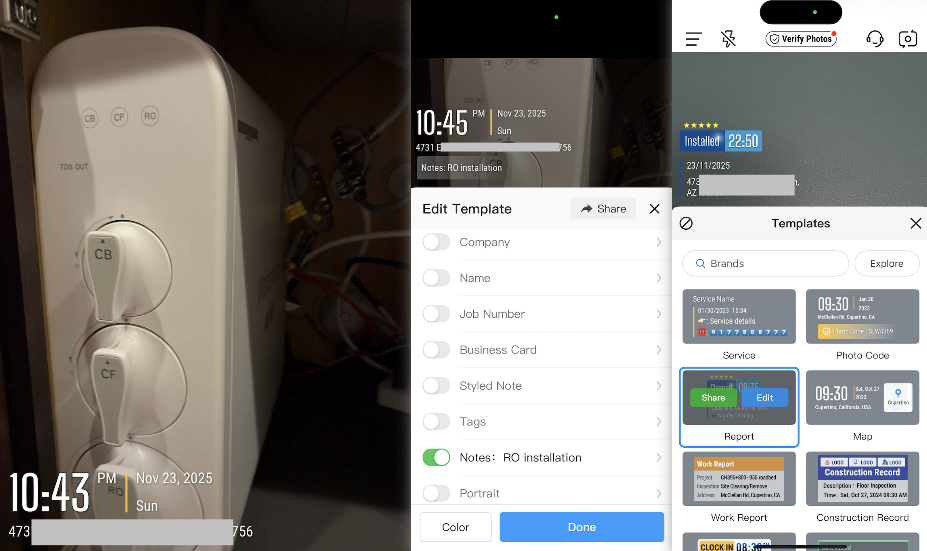
Timemark makes it simple to capture timestamped photos without the usual manual steps. Just open the app, take your shot, and the date and time appear instantly on the image along with any extra fields you’ve chosen, like GPS, project ID, or technician name.
For teams that need reliable records, Timemark also helps ensure integrity. It checks for system clock changes and flags anything suspicious. This short video shows how Timemark does its magic:
What about photos you’ve already taken? Maybe you’re looking at a folder of job site images that need to be documented. Here are a few simple ways to add a date and time stamp to existing images on Android:
Some manufacturers like Samsung’s Gallery app allows adding a date sticker manually to a photo after it’s taken.
Here’s how:
This effectively lets you place a timestamp label on the photo. The catch? It’s manual labor. You’d have to do this for each photo, one by one. Great for the occasional image you want to mark, but not feasible for large batches or ongoing needs.
These apps make it easy to apply the same look to many photos at once. They are simple, quick and great for teams that want a consistent format. The only catch is that it may fall short for serious documentation, since they rely on editable metadata.
The following uses TimeStampIt to show how to batch timestamp photos:
Here's a video walkthrough:
Other batch processing tools like DateStamper and PhotoMarks also offer similar features.
There are tons of timestamp camera apps out there. Some simply stamp whatever your system clock says and add basic info like date and time. Others go further. They cross-check and validate the timestamp and GPS before imprinting it on the photo to ensure the authenticity.
So what should you look for in a timestamp camera built for work? Here are the key factors I always check:
Below is a quick comparison of the top timestamp camera apps. And yes, I’ve tested all of these so you don’t have to!
Here’s my take: if you just want to remember fun times, go ahead and use the built-in features or a free timestamp camera. If you rely on photos as proof, consider leveling up to a more robust tool like Timemark that offers verification. They help you stand behind your photos with confidence.
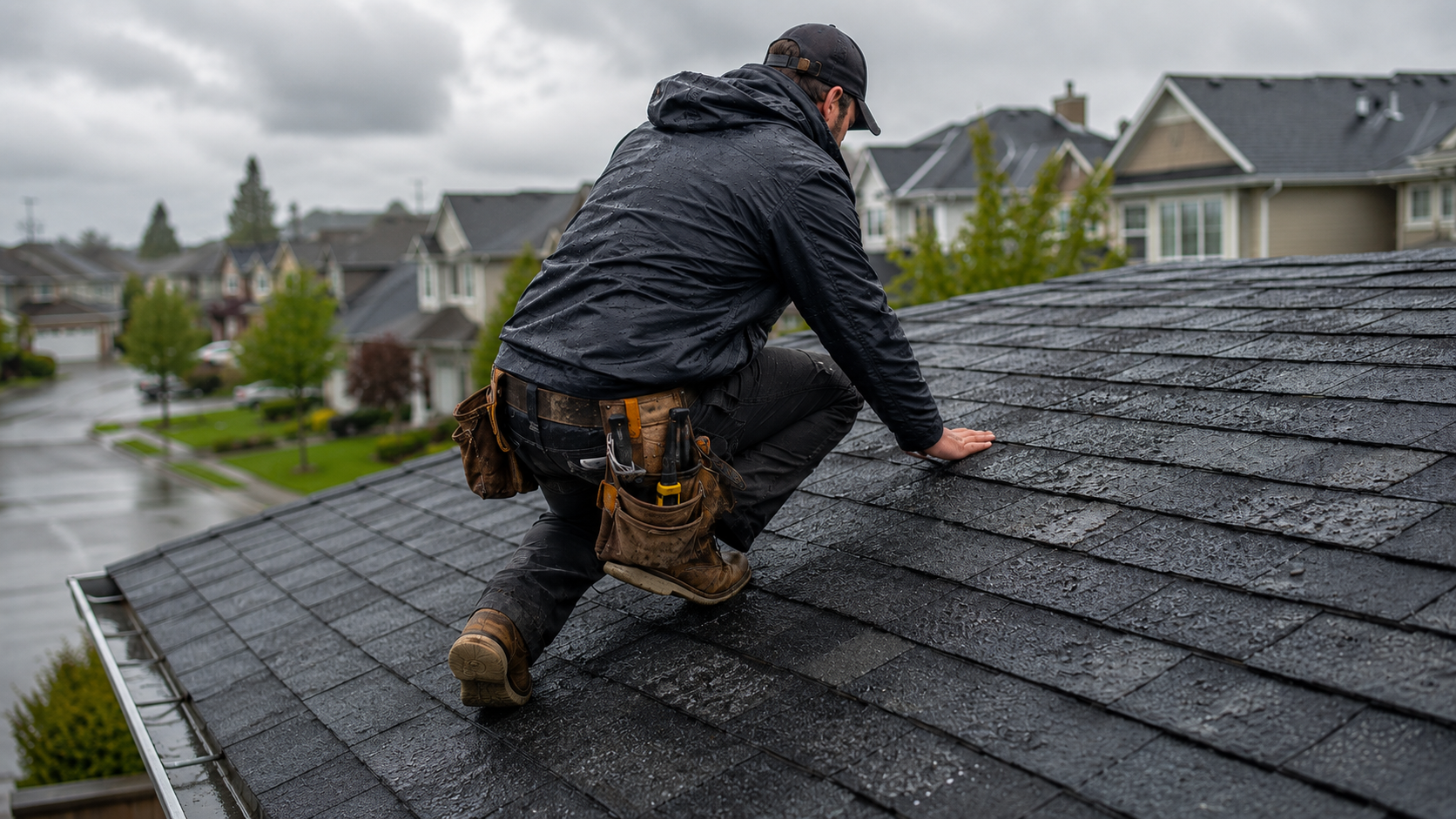
I once had to document roof damage before a repair job. We needed to show exactly when each photo was taken in case there were any disputes with the client later. Using Timemark to capture timestamped photos removed all the guesswork. The photos told a clear story, and no one questioned the timeline.
The truth is simple. A timestamp on a photo does not guarantee anything. What matters is whether the underlying data is trustworthy.Here are what lawyers and insurers look for: 1) Can the timestamp be manipulated? 2) Is the metadata intact and consistent? 3) Was the image edited?
Yes. Timestamp cameras are legal to use. Adding visible date and time to your own photos is simply a form of documentation. In fact, many industries rely on timestamped photos for inspections, reports, compliance and record-keeping.
For most timestamp camera apps, yes. Someone can manipulate the timestamp by changing the device clock. And for date-stamper apps, people can even screenshot an image and re-stamp it, which makes the timestamp easy to alter. However, Timemark goes further. It validates your time and location against network data ,so the timestamp and GPS can’t be manipulated through clock changes or using fake GPS.
A timestamp camera solves three big problems:
1. You have a lot of photos: You and your team take dozens of photos on the job. Later, when you're prepping a report and run them through a bulk editing tool, you realize the timestamps reflect when the photos were forwarded or edited, not when they were actually taken. Adding the correct date one by one? No thanks. Real-time stamping like Timemark Camera saves you from that mess.
2. You need consistent documentation: Field teams need photos that look uniform. Same format. Same placement. Same data points included. Timemark Camera makes this easy with pre-built watermark templates you can use across the whole team.
3. You need solid photo proof: Metadata can be changed. On iPhone or Android, you can edit the time, date, even the GPS tag. That weakens the credibility of your photos when they’re needed for claims, disputes or legal documentation. Timemark is the only timestamp camera app that verifies the time and location at capture, so the core details stay trustworthy.
Timemark is a jobsite photo documentation app with timestamp, GPS geotag, and on-site notes. With Teamspace, field teams can automatically collect, organize, search, and export job photos across projects.
Timemark empowers construction, field service, telecom, and transportation teams to capture verifiable job photos to prevent disputes, support claims, and ensure project transparency. Timemark makes job photos trusted, organized, report-ready, and searchable.
Say goodbye to manual photo uploads, messy email attachments, and lost photos. Keep your job photos organized.



.svg)